

International Nurses Day – May 12
 13/05/2026
Many people still believe that diabetes is simply a condition of elevated blood sugar levels. In reality, however, diabetes is a chronic disease that can lead to many serious complications, among which cardiovascular complications are the leading cause of disability and death. According to major medical guidelines such as those from the ADA (American Diabetes Association), AACE, AHA, and ESC, cardiovascular disease is currently the number one cause of mortality in patients with type 2 diabetes. Therefore, understanding the close relationship between these two conditions can help patients become more proactive in prevention and treatment.
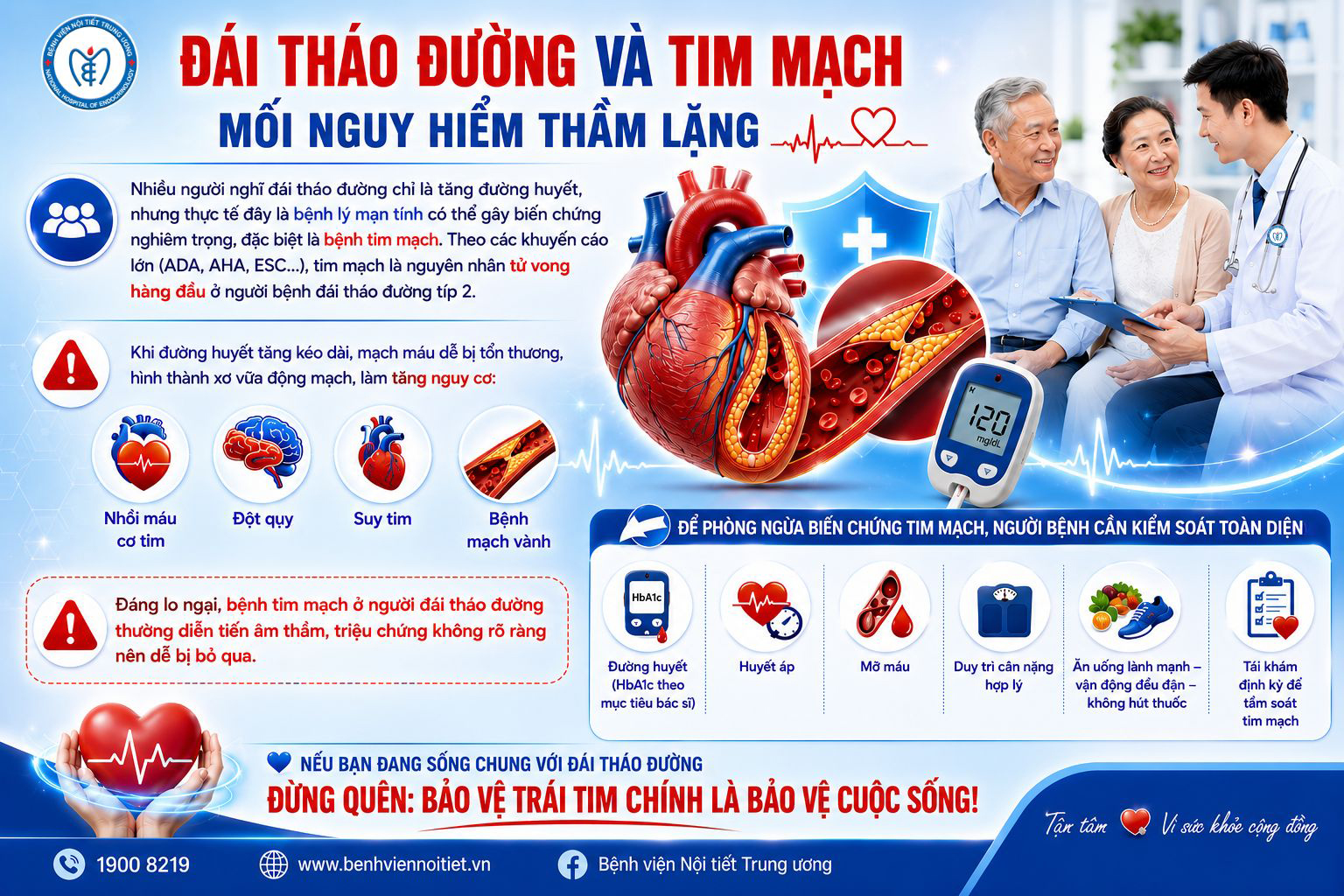
When blood glucose levels remain elevated over a long period, the endothelium — the protective inner lining of blood vessels that allows smooth blood circulation — becomes damaged. As a result, cholesterol plaques can accumulate more easily, leading to atherosclerosis, narrowing, or blockage of blood vessels. This is the underlying mechanism behind serious cardiovascular diseases such as coronary artery disease, heart attack, stroke, and heart failure. Even more concerning, people with diabetes often have additional risk factors including hypertension, dyslipidemia (high LDL and low HDL cholesterol), overweight or obesity, and physical inactivity. The combination of these factors significantly increases the risk of cardiovascular events in diabetic patients compared to the general population.
A particularly dangerous issue is that cardiovascular disease in people with diabetes often progresses silently. Many patients do not experience classic symptoms such as obvious chest pain, but instead present with vague signs like prolonged fatigue, mild shortness of breath, transient chest discomfort, or nonspecific pain. As a result, many cases are only detected when complications have already become severe, including heart attack or stroke. Therefore, regular screening plays a vital role in early detection and timely intervention.
Today, experts emphasize that preventing cardiovascular complications in diabetic patients requires comprehensive management — not only controlling blood glucose but also managing blood pressure, blood lipids, and lifestyle factors. Patients should maintain individualized HbA1c targets (commonly below 7% in many cases), keep blood pressure under good control (often below 130/80 mmHg if well tolerated), manage lipid disorders appropriately, and use statins when indicated. In addition, lifestyle modification is essential, including maintaining a healthy diet, reducing salt and saturated fat intake, increasing vegetables and fruits, engaging in at least 150 minutes of physical activity per week, controlling body weight, and completely avoiding smoking.
Furthermore, modern treatment guidelines also highlight the cardiovascular benefits of certain diabetes medications, particularly SGLT2 inhibitors and GLP-1 receptor agonists. These medications not only help lower blood glucose levels but may also reduce the risk of heart failure, hospitalization, and major cardiovascular events in high-risk patients. However, medications should always be used according to medical indications and under close supervision by healthcare professionals.
To protect cardiovascular health, people with diabetes should attend regular follow-up visits for comprehensive risk assessment. Depending on each individual case, physicians may recommend electrocardiograms (ECG), echocardiography, or vascular examinations to detect early damage and provide timely treatment.
In conclusion, diabetes and cardiovascular disease are closely interconnected and strongly influence one another. Controlling blood sugar alone is not enough; blood pressure, lipid levels, and lifestyle habits must also be managed consistently and effectively. Early, appropriate, and comprehensive treatment can significantly reduce the risk of cardiovascular complications, improve quality of life, and prolong life expectancy for people living with diabetes. If you are living with diabetes, take proactive steps to protect your heart starting today.
🏥 Cơ sở Tứ Hiệp: Đường Nguyễn Bồ, Phường Yên Sở, Thành phố Hà Nội
🏥 Cơ sở Thái Thịnh (Tạm dừng hoạt động để sửa chữa, nâng cấp): Số 80 ngõ 82 Yên Lãng, Phường Đống Đa, Thành phố Hà Nội
📞 Số máy tổng đài bệnh viện: 1900.8219
Website: https://benhviennoitiet.vn
🏥 Cơ sở Tứ Hiệp: Đường Nguyễn Bồ, Phường Yên Sở, Thành phố Hà Nội
🏥 Cơ sở Thái Thịnh: Số 80 ngõ 82 Yên Lãng, Phường Đống Đa, Thành phố Hà Nội
📞 Số máy tổng đài bệnh viện: 19008219
Website: https://benhviennoitiet.vn
 13/05/2026


